Real-Money Casino Table Games in Australia
 Available in AU

Table of Contents
- What Australian Law Means for Online Table Games
- Bitcoin Payments Do Not Establish Which Table Games Are Available
- What the Available Facts Can—and Cannot—Say About Table-Game Odds
- How the Basic Table-Game Decisions Work
- Searching for a Casino Nearby: What This Information Cannot Confirm
- What Counts as a Table Game
- Live-Dealer Games and Randomly Determined Online Outcomes
- Card-Game Outcomes: Hands, the Dealer and the Banker
- Roulette Variants and Their Wheel Layouts
- Poker at the Table: The Aim of the Hand
The guide separates Australian provider restrictions from game availability, odds claims, payment methods and basic table-game mechanics.
What Australian Law Means for Online Table Games
Australia’s online gambling framework places the restriction on the businesses providing real-money casino services, rather than treating an online table game as simply another form of entertainment. The central law is the Interactive Gambling Act 2001 (IGA). Its rules prevent companies operating from within Australia from offering online casino games for money to people who are in the country.
Section 5 of the Act is relevant to that boundary: an operator based in Australia cannot provide residents with real-money interactive casino games. The restriction covers online casino services as a category, so table games fall within the framework when they are offered for real-money play. A game’s name, format or presentation does not remove the provider from the law’s scope if the service is an online casino game involving real-money play.
This is a rule about offering the service. It is not a general statement that every activity involving cards, dice or a game table is illegal. The legal issue described here is the provision of real-money interactive casino games through an online service by an Australian-based operator. That distinction helps keep the law in view without treating all games or all forms of play as legally identical.
Choosing a real-money table-games casino in Australia means weighing practical details such as payment timing, deposit requirements and licensing. Use these notes to see which operator details are available before deciding what to explore.
1. Ricky Casino
Payout speed: crypto under 1 hour, PayID 1-3 business days · Min. deposit: A$20 (A$30 to qualify for the bonus) You can withdraw via crypto in under an hour, while PayID payouts take 1–3 business days. The minimum deposit is A$20, or A$30 to qualify for the bonus.
2. Roby Casino
License: Curacao eGaming (Roby Games Ltd) Roby Casino is licensed by Curacao eGaming under Roby Games Ltd.
3. Kingmaker
Payout speed: crypto ~90 minutes, fiat 1-5 days · Min. deposit: A$30 You can expect crypto payouts in about 90 minutes, while fiat payouts take 1–5 days. The minimum deposit is A$30.
4. JustCasino
License: Curacao Gaming Control Board JustCasino is licensed by the Curacao Gaming Control Board.
5. Lucky Dreams
License: Curacao · Min. deposit: A$20 (POLi) Lucky Dreams is licensed in Curacao. Its minimum deposit is A$20 via POLi.
6. SpinsUp
License: Curacao Gaming Control Board OGL/2023/174/0082 (Dama N.V.) SpinsUp holds a Curacao Gaming Control Board licence, OGL/2023/174/0082, under Dama N.V.
7. Vegaz Casino
License: Curacao OGL/2024/1335/0780 · Min. deposit: EUR 20 Vegaz Casino holds Curacao licence OGL/2024/1335/0780. Its stated minimum deposit is EUR 20.
8. Wild Tokyo
License: Curacao · Payout speed: crypto 30-60 minutes, fiat 1-5 days · Min. deposit: A$10 You can withdraw via crypto in 30–60 minutes, while fiat payouts take 1–5 days. The minimum deposit is A$10.
9. 7Bit Casino
License: Curacao, operated by Dama N.V. 7Bit Casino is licensed in Curacao and operated by Dama N.V.
10. GoldenCrown
License: Curacao Gaming Control Board OGL/2023/176/0095 (Hollycorn N.V.) GoldenCrown holds Curacao Gaming Control Board licence OGL/2023/176/0095, under Hollycorn N.V.
The provider is the focus
For someone assessing an online casino table-game service, the important question is not only what appears on the screen. The IGA’s restriction concerns who provides the real-money service and whether that provider is operating from within Australia. A site’s use of familiar casino language does not by itself establish where its operator is based or whether the service meets the requirements of Australian law.
The rule also means that a locally based business cannot make a real-money online casino offer lawful merely by describing it as a table-game feature or placing it alongside other online content. The relevant issue remains the service being supplied: real-money interactive casino games offered to people in Australia by an operator based here are prohibited under the framework.
It does not establish the legal status, accessibility or suitability of any particular service outside Australia. Those questions should not be inferred from the fact that a site can be found online, from its wording, or from the type of game it displays.
ACMA’s enforcement role
The Australian Communications and Media Authority (ACMA) is responsible for enforcing compliance with the IGA. Its role includes blocking unlicensed domestic platforms that breach the rules. That enforcement function is one reason a website’s appearance or availability at a particular moment should not be mistaken for evidence that its offering complies with Australian law.
Pokies & Games: Slots and Casino Games in Australia · Low-Volatility Slots in Australia: How They Work
Blocking is an enforcement measure directed at platforms; it does not change the underlying rule. The law restricts the provision of real-money interactive casino games by locally based operators, while ACMA works to enforce that boundary. If a service is blocked, the action is not a finding about the quality of a particular game. It reflects the regulatory response to the platform’s status under the applicable rules.
The distinction between the statute and enforcement also matters. The IGA sets the legal framework; ACMA applies and enforces it. A platform’s own claims about its games or business do not replace either the law or the regulator’s role. Nor should a promotional description be read as a reliable explanation of how Australian rules apply.
What this means when reading an online offer
If you encounter an offer for real-money casino table games, separate the nature of the activity from claims made about the provider. The activity may be presented as online play, but the Australian rule addressed here concerns whether a locally based operator is supplying real-money interactive casino games to people in the country. An attractive description, a live presentation or a familiar game label cannot, on its own, settle that question.
The IGA is the key reference point for this issue, and ACMA is the regulator responsible for enforcement, including blocking unlicensed domestic platforms. These points describe the Australian legal framework; they are not a recommendation to use a particular service. They also do not establish that a platform is lawful simply because it is accessible, or that any particular online offer is available to Australian residents.
Legal Restriction
Under the Interactive Gambling Act 2001, operators based in Australia are prohibited from providing real-money interactive casino games to people within the country.
When considering the legal position, keep the focus on the provider and the real-money service being offered. The restriction is not a comparative judgement about table games, and it does not say which game is preferable. It sets a boundary on what locally based operators may provide. ACMA’s enforcement role supports that boundary by addressing non-compliant domestic platforms.
Bitcoin Payments Do Not Establish Which Table Games Are Available
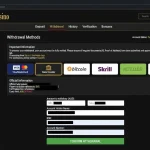
Bitcoin is a payment method, not a category of table game. The phrase “Bitcoin table games” can therefore mean that someone is looking for table games alongside a Bitcoin payment option; it does not identify a particular game, prove that a service accepts Bitcoin, or confirm that any game is available to you.
That distinction matters when comparing Bitcoin table games with games described as “normal” casino table games. The comparison is not necessarily between two sets of games. It may instead be about how a person expects to pay, while the games themselves are defined by their rules and format. A payment label alone tells you nothing about the table, the choices made during play, or the way an outcome is produced.
The same caution applies to phrases such as “Bitcoin casino table games” or “casino table games for Bitcoin.” They can describe an intended combination, but they are not evidence that a particular platform provides it. You should not infer from a Bitcoin reference that a service offers blackjack, roulette, poker, or any other named game. Nor does it show that the service is open to Australian residents or that using it is permitted.
Best 3-Reel Slots in Australia: Features and Access · High-volatility slots in Australia: payout guide
A page or advertisement can place payment language beside a game category without establishing that the two are available together. The terms may refer to different parts of a service, may be out of date, or may be promotional wording rather than a precise description. Before treating such wording as meaningful, distinguish what it actually states from what you might assume it promises. A mention of Bitcoin is not, by itself, confirmation of a payment option, and a mention of table games is not confirmation of a game catalogue.
This also means that “top” or “best” table-game wording cannot be resolved by the payment method. Bitcoin does not make a table game better, and it does not identify which game a person should choose. If you are trying to understand what a description refers to, look for clear information about the game itself rather than relying on a payment label. If the wording does not name or explain a game, it leaves that point unanswered.
A “tabletop” or “felt table” phrase can be ambiguous too. It may evoke a physical casino table, but it does not establish that a real table is involved or explain how play is delivered. Likewise, a page saying that table games are open does not necessarily tell you which games are included, whether the wording is current, or whether access is available from Australia. Do not treat a broad label as a specific availability notice.
The practical distinction is simple: payment and game selection are separate questions. Bitcoin-related wording concerns, at most, a possible way to transfer value; it does not describe the rules, identify the games offered, or verify that a service can lawfully provide them to someone in Australia. The Interactive Gambling Act 2001 prohibits operators from providing real-money online casino games to people located here. A payment method does not change that restriction.
Do
- Read payment claims separately from game claims
- Ask what wording actually confirms about payment
- Distinguish game descriptions from payment labels
Don’t
- Fill information gaps with assumptions
- Treat combined phrases as proof of an offering
- Use Bitcoin references as evidence of game availability
So, when you encounter a Bitcoin reference beside table-game language, read the two claims separately. Ask what the wording actually confirms about payment, and what it says about the games. Do not fill gaps with assumptions or treat a combined phrase as proof of a particular offering. That keeps a payment search from being mistaken for reliable information about game availability.
What the Available Facts Can—and Cannot—Say About Table-Game Odds
A ranking would need comparable, game-specific information. Without that, claims about which option gives you a better chance or a lower house edge would be guesswork, not a useful comparison.
“Odds” can refer to different things. You might mean the chance that a particular outcome occurs, the amount paid if it does, or the expected balance after repeated wagers. These are related, but they are not interchangeable. A larger advertised payout, for instance, does not by itself tell you how likely the winning outcome is. A comparison that uses one meaning for one game and another meaning for a different game can give a misleading impression.
A house-edge figure also needs context. To interpret one, you would need to know which wager it describes and what rules apply. A figure for one bet should not automatically be treated as the edge for every way of wagering in that game. Nor would a broad label such as “blackjack” or “roulette” be enough to establish a universal number for every version or decision.
That is why a casino table-games house-edge chart should show its basis, not just a row of percentages. It would need to identify the game and wager being compared, explain the relevant rules, and use the same calculation approach throughout. If those details are absent, the chart may look precise while leaving you unable to tell what its figures actually represent.
Mines Casino Game in Australia: Access and Terms
The same caution applies when looking for the best odds at casino table games. A short answer naming a single game may sound decisive, but it cannot account for differences in rules, wagers, or the meaning of “best.” One player may be asking about the chance of a win on a particular decision; another may mean how much a winning bet returns. Those questions call for different information.
RTP and volatility figures for pokies do not fill this gap. RTP describes a theoretical return over a very large number of spins, while volatility describes how payouts are distributed. Those measures concern pokies; they do not establish the odds of a table-game wager. Applying them to blackjack, poker, roulette, or a dice-based game would confuse distinct forms of play rather than clarify the comparison.
For you, the practical distinction is between a description of how a game works and evidence about its odds. Knowing that a game involves cards, a dealer, or a dice roll does not, by itself, tell you the probability or expected return for a particular wager. The same is true of a named game: the name alone is not a substitute for the rules and calculations behind a comparison.
So, no reliable “best” or “worst” table-game ranking can be drawn from these descriptions. Treat any confident ranking cautiously unless it explains exactly which wager and rules it covers and how its figures were calculated. A number without that context can be easy to repeat and difficult to interpret.
Attention: A number without context regarding wagers and rules can be easy to repeat but difficult to interpret reliably.
How the Basic Table-Game Decisions Work
A table game is easier to follow when you separate the action from the wager. In a card game, you may be judging your hand against the dealer’s. In another format, you may choose which hand you expect to prevail, or place a wager on the result of a dice roll. The decision changes with the game, so the first step is to identify what the wager concerns.
A hand against the dealer
In Blackjack, the player’s aim is to finish with a hand value closer to 21 than the dealer’s. The comparison is between your hand and the dealer’s, rather than a contest to build a hand against the other people at the table.
That gives you a straightforward way to read the central wager: it concerns how your hand will compare with the dealer’s. If you are learning how to play table games at a casino, begin by understanding that objective before trying to follow the pace of a round. Knowing what is being compared makes the action easier to interpret, even when you are watching rather than playing.
5-Reel Slots in Australia: Features, RTP and Checks
Choosing a hand or a tie
Some table-game wagers let you choose the outcome you favour by backing your hand, the Banker’s hand, or a tie. This is a different kind of decision from trying to make your own hand closer to a target: you are selecting which of those outcomes you think will occur.
Before placing any wager, make sure you can distinguish the available choices and understand what each one represents. A bet on a hand and a bet on a tie are not interchangeable. The useful question is not which option sounds more attractive, but what event your wager is attached to.
This basic distinction can help when you are learning the rules of a table game. Take a moment to identify the sides involved and whether a tie is a separate selection. That gives you a clear picture of what you are choosing without assuming that different games share the same betting structure.
Betting on a dice roll
In a dice-based table game, players roll a pair of dice and bet on the outcome. The decision is therefore tied to the roll, rather than to a hand competing against a dealer or another hand.
Casino dice games in Australia: legal context
For someone learning how to play casino table games, it helps to keep those formats apart. A hand-versus-dealer game asks you to consider a comparison between hands. A hand-or-tie wager asks you to select among those outcomes. A dice wager centres on what the roll will produce. These are different decisions, even though each involves placing a bet at a table.
If you are watching a round, first identify the event that determines the wager: a comparison of hands, the result for a selected hand or a tie, or the dice outcome. That simple check can keep the rules from blurring together. It also helps you follow play at a measured pace, rather than treating every table as if it offered the same kind of choice.
Searching for popular table games or looking to learn the basics does not tell you which format will suit you. Focus instead on what your wager is tied to and what outcome you are selecting. If that is unclear, pause before betting and read the game’s instructions. A clear understanding of the decision is more useful than choosing a table because its name seems familiar.
Identifying the Wager
Step 1: Identify the event
Determine if the wager concerns a comparison of hands, a selected hand/tie, or a dice outcome.
Step 2: Determine the objective
Establish if the goal is to beat a dealer’s target, select a prevailing side, or predict a roll result.
Step 3: Review instructions
If the decision remains unclear, read the game’s instructions before placing a bet.
Searching for a Casino Nearby: What This Information Cannot Confirm
A request for a casino close to you expresses a location-based need, but the wording alone cannot identify where you are or establish that a suitable venue is nearby. “Nearby” depends on your actual location, and a place name in a request may refer to a destination rather than where you are now. A result that appears relevant by wording is not, by itself, confirmation of distance, opening status or access.
The same caution applies when you are looking specifically for table games. A reference to a casino does not show which activities are offered at a venue, whether table games are operating, or whether they are available to visitors at a particular time. A broad description may cover very different things, so you should not treat the word “casino” as proof of a particular game or facility.
Location phrases can also be ambiguous. Someone asking about a casino in Miami may be asking about that city, while someone seeking the closest casino may expect results based on their current position. Those are different needs. A city name does not confirm the user’s location, and a request for the nearest venue does not supply the information needed to measure proximity. Likewise, a reference to casinos in another state does not establish that the person is there or that any named place is relevant to them.
Crash Casino Games in Australia: Legal Context
“New casino table games” can be read in more than one way: it might mean recently introduced games, or it might mean table games at a newly opened casino. The phrase alone cannot resolve that distinction. It also cannot confirm that a new venue exists, that its doors are open, or that it offers the particular activity someone has in mind.
Keep separate the questions a location request can raise: where a venue is, what it offers, whether it is currently operating, and whether you can access it. One answer does not settle the others. A listed address, for instance, would not by itself establish current operating details or the availability of a particular table game. Nor does a general description of table games verify that a nearby physical casino provides them.
For a useful decision, location and venue details need to be checked independently and kept current. Treat broad labels as starting points, not confirmation. If the result does not clearly identify the place and the specific facility you are trying to find, it cannot answer whether that option is actually close to you or suitable for your purpose. A search phrase can describe what you want; it cannot prove that a matching venue exists, is accessible, or has the table games you expect.
What Counts as a Table Game
A casino table game is best understood by the kind of activity it involves: a wager is connected to an outcome produced during play. The word “table” describes a familiar way of organising casino games, but the defining idea is the relationship between the game’s events and the bets placed on them. It is not simply the presence of a physical table or a particular piece of equipment.
A casino table game is defined by the relationship between the game’s events and the bets placed on them, rather than the presence of physical equipment.
A dice-based example makes that distinction clear. Players roll two dice, and their wagers concern the result of the roll. The central feature is the link between a dice outcome and a bet; the important point is not a particular strategy, a promised return or a prediction about what will happen. A game can therefore be described at the level of its mechanics without turning that description into advice on how to wager.
The term also does not identify a single set of rules. “Table game” is a broad category, not the name of one specific activity. To understand an individual game, you would need to know what event is being wagered on and how the rules define that event. The category alone does not tell you the available choices, how a result is settled or what the consequences of a bet will be.
That distinction matters when you encounter the phrase in a casino context. It can refer to games organised around wagers and outcomes, rather than to every feature or service associated with a casino. A table, a dealer or a digital display may be part of how a game is presented, but those details do not by themselves explain its mechanics. The useful starting point is always the underlying question: what happens in the game, and which outcome does a wager concern?
The dice example gives a straightforward answer: the roll produces an outcome, and players bet in relation to it. It does not, on its own, establish the range of possible bets, the likelihood of any result, or how a particular platform presents the game. Those are separate matters from the basic definition. Keeping the category distinct from those details helps prevent a broad label from being mistaken for a complete description.
Bonus Buy Slots in Australia: How to Compare
So, when you see “table game,” read it as a general label for a wagering activity whose play is organised around defined outcomes. A pair of dice and bets tied to the roll illustrate the idea without requiring a catalogue of titles or a guide to playing. The label tells you the broad kind of activity; the rules of the particular game tell you what its outcomes mean.
Live-Dealer Games and Randomly Determined Online Outcomes
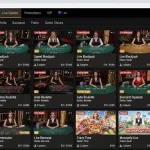
The phrase “live table game” describes how a game is presented and how its action is produced; it does not, by itself, tell you which games are offered or whether a particular service is available to you. A live-dealer format uses a real dealer and real casino equipment, with video streamed to players. An online version can instead use a random number generator (RNG) to determine outcomes, such as which cards are dealt or where a roulette ball lands.
That distinction matters when you are trying to understand what sits behind a table-game screen. In a live-dealer setting, you see a dealer and equipment through a video stream. In an RNG-based version, the relevant result is generated by software rather than shown as the result of a streamed physical game. Both may appear on a screen, but the way the outcome is produced is different.
A camera view should not be confused with an RNG animation, and an animated display should not be taken as proof that a live event is being streamed. Look for a clear description of the format before treating the screen as evidence of how a result is determined. The important question is not simply whether a game looks like a casino table, but whether its stated format is live-dealer or software-determined.
Live-Dealer Format
Uses a real dealer and physical equipment with video streamed to the players.
RNG-Based Format
Uses a random number generator (software) to determine outcomes like cards or roulette balls.
People looking for a list of casino table games may also encounter labels such as “live casino” or “live table.” Those labels are not a reliable catalogue. They describe a format, not a confirmed selection of games. Likewise, searching for a casino with table games does not establish that any particular title is available, or that the service can lawfully be used from your location. Do not infer either from the presentation alone.
For an RNG-based online game, the generator determines the cards dealt or the roulette result. The visible interface is how that result is displayed; it is not a physical dealer’s action being streamed. In a live-dealer game, by contrast, the video shows a real dealer using real equipment. These are useful distinctions, but they do not establish which format is fairer, more suitable, or more advantageous. Nor does a category label verify how a specific service operates.
If you encounter a table-game description, read its wording for the production method rather than relying on an image or the word “live” in isolation. Keep availability and legality separate from format: knowing whether outcomes come from a streamed dealer or an RNG does not confirm that the game is offered to you or that access is permitted.
Card-Game Outcomes: Hands, the Dealer and the Banker
Card games can frame the result in different ways. In Blackjack, the central comparison is between your hand and the dealer’s: the aim is to finish with a hand value closer to 21 than the dealer’s. The outcome depends on that comparison, rather than on building a hand against other players.
Lightning Link Online Pokies in Australia: Access
That objective gives the player a clear reference point, but it does not by itself describe every decision in a hand. The key distinction is between the value of your hand and the dealer’s value. “Closer to 21” is the goal; it should not be read as a promise that a particular hand will win or as a guide to how likely a result is.
Other card-table wagers can focus on which hand wins. A player may bet on their own hand, on the Banker’s hand, or on a tie. These are separate possible outcomes: backing a hand means selecting which side you expect to prevail, while a tie wager selects an equal result. The Banker is the named side in this kind of wager; it is not another name for the dealer in the Blackjack objective.
It helps to keep these structures distinct. A Blackjack comparison asks whether your hand is closer to 21 than the dealer’s. A hand-versus-Banker wager asks which of the named hands will prevail, or whether they will tie. The shared setting of a card table does not make the objectives interchangeable.
Before taking part in any card game, identify what the wager actually covers. A bet on a hand is not automatically a bet on a tie, and a Blackjack objective is not defined by the Banker-hand choices described above. The wording of the game’s rules should make clear which outcome a wager refers to. If the outcome is unclear, do not assume that familiar terms mean the same thing across different card games.
Comparing Card Game Objectives
In Blackjack, the objective is a comparison between your hand and the dealer’s to get closer to 21. In other card games, wagers may focus on whether the player’s hand, the Banker’s hand, or a tie will prevail.
These distinctions describe the basic aim and the kinds of outcomes a player may back; they do not establish what games are offered or compare their odds. A clear understanding of the stated objective is a useful starting point, but it cannot predict the result of a hand.
Roulette Variants and Their Wheel Layouts
Roulette comes in several versions, with European, French and American among the main variants. Their names identify different forms of the game, but the clearest distinction in the wheel layout is the green zero area: European and French wheels have a green 0, while the American wheel has both a green 0 and a green 00.
European and French roulette each have 36 numbered spaces and a green 0. The American version also has numbered spaces, but its layout includes the additional green 00 alongside the 0. That is the key visible difference when you compare these wheel formats. The labels “European” and “French” should not lead you to assume that their number of numbered spaces differs: both are described as having 36 numbers and a green zero.
7-Reel Slots in Australia: Features, RTP and Access
When you look at roulette casino table games, focus first on the wheel itself rather than expecting the variant name to explain every detail of play. A single green 0 marks the European and French layouts; the American layout shows two green spaces, 0 and 00. These are concrete features you can use to tell the versions apart.
A table’s display may show a wheel, a betting area, or both, but the layout detail that separates these variants is the wheel’s green zero section. The difference is easy to overlook if you scan only the numbered positions. Checking whether a 00 appears gives you a straightforward way to identify the American format.
The number and arrangement details above are enough to distinguish the named formats without treating one as preferable. For a quick visual check, note whether the wheel has one green zero or both a green 0 and 00, and whether the version is European or French, each with 36 numbers and a green 0.
Live Baccarat Online Casino Australia: Access and Rules
Free-play labels, promotions, or table rental arrangements do not change these defining wheel features. Whatever the setting, the useful distinction remains the same: European and French roulette have 36 numbers plus a green 0, while American roulette has a green 0 and a green 00.
Poker at the Table: The Aim of the Hand
Poker centres on making the strongest possible hand in competition with other players. That objective is what distinguishes the game’s basic contest: each player is trying to finish with a hand that stands ahead of the others, rather than trying to beat a dealer’s target.
The challenge is not simply to hold cards. You are trying to form the best hand available to you while considering that other players are pursuing the same goal. The result depends on how the hands compare, so a strong-looking hand is meaningful only in relation to the hands held by the other participants.
Pokie Machines in Australia: Choosing What to Play
This gives poker its competitive shape. Players are not all working toward a shared outcome; each is seeking an advantage over the rest of the table. The focus remains on the quality of the hand and how it fares against opponents. That is the core idea behind poker as a table-game category, without needing to assume a particular format or set of rules.
If you are trying to understand what a casino poker table game involves, start with that distinction: the aim is to build the best possible poker hand against other players. The precise way a hand is formed or assessed depends on the rules in use, so the broad objective should not be mistaken for a complete set of playing instructions.
Poker’s appeal lies in this direct contest between hands. Each participant is seeking the strongest result, while the others are doing the same. That makes the central question straightforward: whose hand is best? The answer determines how the contest is judged, but the basic aim does not change—build the best possible hand in competition with the other players.
Pokies

Best 3-Reel Slots in Australia: Features and Access
Explore classic paytables, bonus features, RTP checks, free-play options, browser access and the limits on...

5-Reel Slots in Australia: Features, RTP and Checks
A practical look at Sweet Bonanza’s reported bonus rules, RTP variants, paytables, access and what...

7-Reel Slots in Australia: Features, RTP and Access
Learn how reel labels, bonus triggers, RTP, free play and Australian access shape what a...

Bonus Buy Slots in Australia: How to Compare
See how a bonus buy changes entry to a slot feature, and what demos and...

High-volatility slots in Australia: payout guide
Volatility describes the pattern of win frequency and size, not the outcome of any individual...

Low-Volatility Slots in Australia: How They Work
Low volatility describes a tendency toward more frequent, smaller wins, not a prediction of what...

Pokie Machines in Australia: Choosing What to Play
A practical guide to game features, RTP and volatility, free play, casino access and the...

Progressive Jackpot Slots: How They Work and Reset
Progressive prizes collect wager contributions and reset after a qualifying win, while eligibility, odds and...

RTP in Australian Online Slots: What It Means
RTP describes expected returns over extensive play, while randomness, game versions and variance shape what...

Video Slots in Australia: Mobile Play and RTP
Explore mobile slot mechanics, the limits of free play, game features and how RTP relates...

Casino dice games in Australia: legal context
Online listings do not establish Australian authorisation, and dice-related formats, rules and strategy claims require...

Crash Casino Games in Australia: Legal Context
A guide to Australian restrictions, bonus conditions, crypto fees, free-play limits and the evidence behind...

Lightning Link Online Pokies in Australia: Access
A guide to venue machines, free-play credits, jackpot features and the limits of online access...

Live Baccarat Online Casino Australia: Access and Rules
The guide distinguishes overseas access from Australian licensing and outlines table formats, costs, rules and...

Live Blackjack Online in Australia: Legal Guide
The guide separates operator legality from site appearance and outlines what can—and cannot—be verified about...

Live Roulette in Australia: English-Speaking Dealers
The Interactive Gambling Act 2001 restricts operators from providing real-money online casino games to people...

Mines Casino Game in Australia: Access and Terms
Mines is distinct from slot content, and labels, demos and promotional terms alone do not...

Plinko Casino Australia: Games, Payments and Rules
Plinko is a broad game label, so rules, outcomes, payment terms and legal context need...

Pokies Tips and Tricks: Odds, RTP and Safer Play
Understand published RTP, session budgets and bonus terms without treating timing or patterns as a...